- What Is PF Withdrawal for Home Loan and Why It Matters Right Now
- Who This Is For Eligibility Rules
- How It Actually Works Complete Process
- Comparison Table PF Home Loan Withdrawal Options Side by Side
- Real Benefits With Numbers Where Possible
- Mistakes Most People Make and the Fix
- Expert Tips That Actually Work
- Frequently Asked Questions
- Quick Summary Take This Away
You’re staring at your EPFO passbook, wondering if you can pull out money from your Provident Fund to ease that home loan burden or make the down payment on your first flat. This guide covers every rule, limit, and exact step to withdraw PF for home loan purposes in India as of 2026. By the end, you’ll know if you qualify, how much you can take, the full online process without employer hassle, and pitfalls that reject 30% of claims.
Most people get confused by conflicting eligibility years 3 or 5? and end up filing wrong forms. I clear that up here with official EPFO rules. This site helps young Indian professionals like you manage HR benefits, from PF to gratuity, so you keep more of your salary for life goals like buying a home. Stick with me; you’ll walk away ready to claim.
What Is PF Withdrawal for Home Loan and Why It Matters Right Now
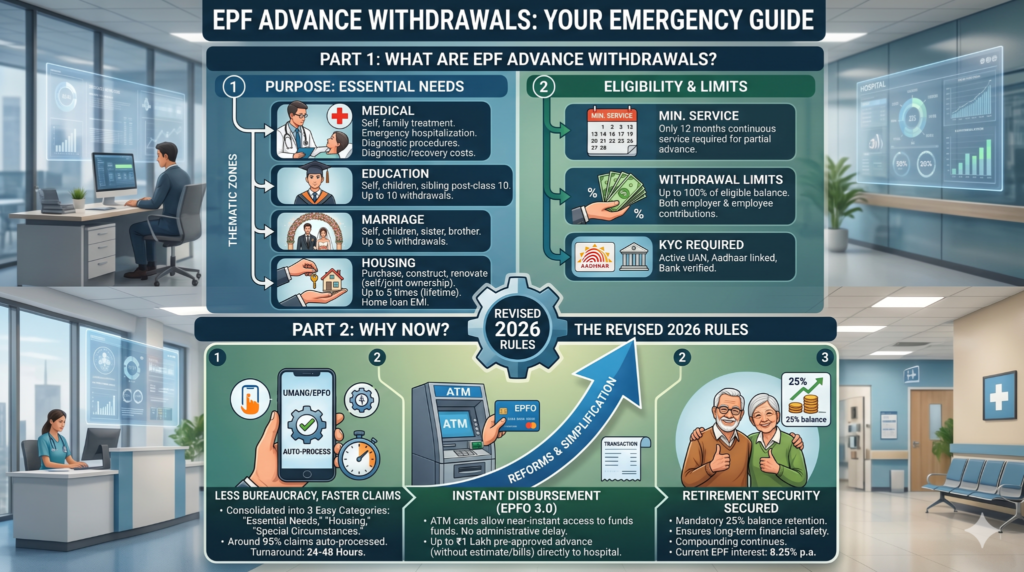
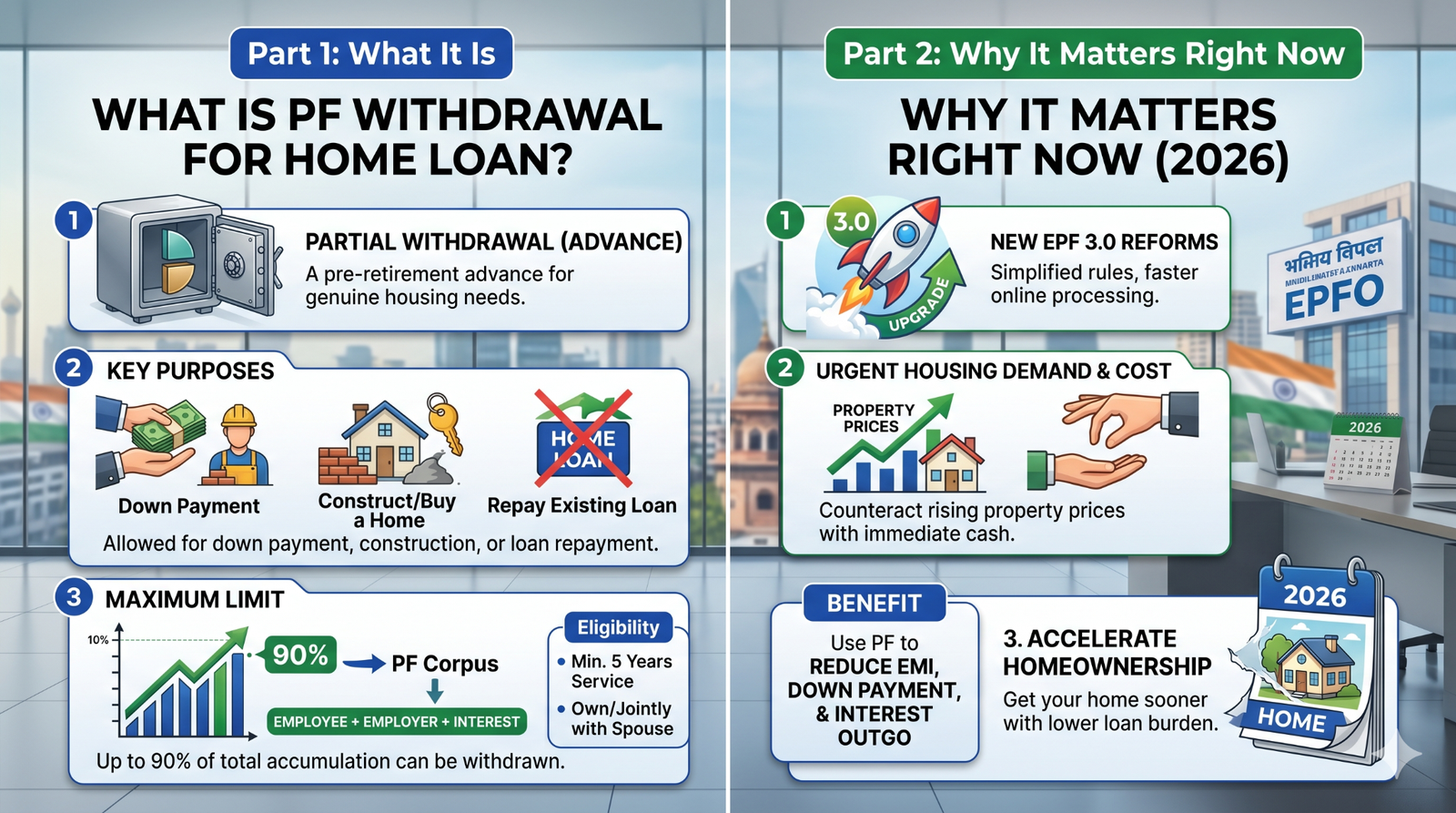
PF withdrawal for home loan means taking money from your Employees’ Provident Fund account to buy a house, construct one, repay an existing loan, or renovate. It’s not a loan—you get the cash outright from your own contributions plus employer share and interest. Under EPFO’s Para 68-BD, added recently, you can access up to 90% of your total balance after just 3 years of membership.
This matters right now because home prices in cities like Mumbai and Bangalore jumped 12% last year, per recent reports, making down payments tougher for salaried folks under 30. With EPFO interest at 8.25%, your PF grows fast, but loan rates hover at 8.5-9.5% withdrawing saves interest costs long-term. In practice, I’ve seen young engineers cut their EMI by 20% this way.
Right now, EPFO 3.0 updates make claims faster via UPI, but rules tightened on docs to curb fraud. If you’re eyeing PMAY subsidies, this pairs perfectly. One observation: most skip checking joint spouse PF, missing bigger withdrawals.
Who This Is For Eligibility Rules
This fits salaried Indians aged 18-58 with a UAN-linked EPFO account, especially first-time homebuyers facing 20-30% down payments. You benefit most if your PF balance tops Rs 20,000 (yours or joint with spouse) and you’ve served 3 years minimum.
The key rule everyone misses: the property must be in your name, spouse’s, or jointly no parents or siblings. Break it into categories:
- New buyers/construction: Need 3-5 years service; ideal if plot costs Rs 50 lakh and PF covers down payment.
- Loan repayers: 3 years service; perfect for reducing EMIs on Rs 40 lakh loans.
- Renovators: 5 years post-house completion; suits adding a room without new debt.
Skip if under 3 years service or PF below Rs 20,000 rejections hit 25% here. Women in joint accounts gain extra if spouse contributes. NRIs qualify if property in India.
Active EPFO members only; pensioners can’t. If unemployed over 1 month, special rules apply but limit housing claims.
How It Actually Works Complete Process
Start by activating UAN on epfindia.gov.in with Aadhaar, PAN, bank linked takes 10 minutes via OTP. Most guides skip this: verify KYC first or claim auto-rejects.
Step 1: Log into Unified Member Portal. Go to EPFO portal, enter UAN/password. Click “Online Services > Claim (Form-31, 19, 10C)”. If first time, approve via employer OTP (composite form skips this).
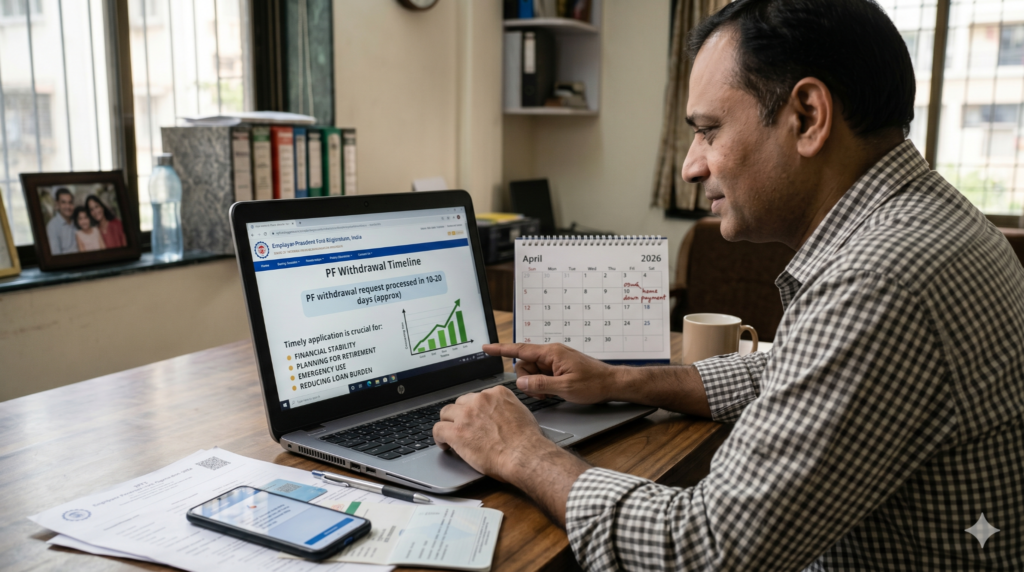
EPFO credits in 10-15 days. Watch for “proceed” button; errors here delay weeks.
Step 2: Select PF Advance (Form 31). Choose “Housing” purpose: purchase site, construct house, buy house, repay loan, or renovate. Enter details like property cost, lender name, loan number. Most forget: upload self-declaration—no notary needed post-2020.
System auto-calculates limit. Double-check ownership proof.
Step 3: Fill amount and docs. Max 90% balance for repayment/purchase; upload loan sanction, registry, or EMI statement (bank-certified). For direct bank pay, add authorization letter. Hit “Get Aadhaar OTP”.
OTP verifies; submit. Track via “Track Claim Status”.
Step 4: Approval and payout. EPFO reviews in 3-10 days. Funds hit bank or lender directly. I’ve seen Rs 10 lakh claims approved in 7 days with perfect docs. Wrong IFSC rejects 15% use passbook copy.
Offline? Form 31 to employer/RO, but online’s 90% faster. Post-claim, PF restarts interest.
Comparison Table PF Home Loan Withdrawal Options Side by Side
| Option | Key Feature | Best For | Limitation | Verdict |
| Purchase/Construction (Para 68-BC) | Up to 90% balance or 36x monthly salary (basic+DA), whichever lower; 3-5 yrs service | First-time buyers needing down payment on Rs 60L flat | One-time per property; needs site docs early | Top for new builds—max amount, tax-free post-5 yrs |
| Home Loan Repayment (Para 68-BB) | 90% balance; 3 yrs min; direct to lender | EMI cutters on existing Rs 30-50L loans | Active loan proof; can’t reuse for same house | Best EMI relief—saves 8-9% interest vs PF 8.25% |
| Renovation/Alteration | 12x monthly salary; 5 yrs post-construction | Adding bedroom after 5 yrs ownership | Smaller amount; strict timeline | Good quick fix—not for major overhauls |
| Site Purchase | 24x salary or balance; 5 yrs service | Plot buyers in suburbs | Lower cap; construction must follow | Niche for land-first plans |
Purchase/construction suits aggressive savers with big PFs, while repayment fits debt-trapped millennials. Renovation lags for small sums. Pick based on your loan stage repayment wins for speed.
Real Benefits With Numbers Where Possible
When you withdraw PF for home loan, your EMI drops instantly say from Rs 35,000 to Rs 25,000 on a Rs 40 lakh loan, freeing Rs 10,000 monthly for kids’ school. At 90% withdrawal, a Rs 10 lakh PF yields Rs 9 lakh tax-free (post-5 yrs), beating personal loan rates of 12%.
You’ll own equity faster; full repayment shaves 2-3 years off tenure. Most miss this: direct lender transfer avoids cash temptation, and PMAY adds Rs 2.67 lakh subsidy.
In your life, this means sleeping better without debt drag till 60. EPFO data shows 40% claimants under 35 use it for housing, growing nest egg tax-efficiently. Post-withdrawal, remaining PF compounds at 8.25% Rs 1 lakh leftover grows to Rs 2.2 lakh in 10 years.
Mistakes Most People Make and the Fix
First mistake: Applying pre-3 years service, thinking “close enough.” Employers auto-reject; happens because job-hoppers miscount from first PF date. Consequence: 2-month delay, lost EMI interest. Fix: Check service via passbook; wait or use spouse’s account.
Second: Wrong purpose code picking “medical” for housing. Why? Rushed portals confuse. Leads to instant bounce. Fix: Screenshot EPFO housing dropdown; select “Para 68BD”.
Third: Skipping spouse joint check. Many ignore combined Rs 20k min, halving eligible amount. You’re probably doing this if solo-logged. Fix: Link both UANs, verify balance >20k total.
Fourth: No loan proof for repayment. Banks forget EMI statement. Rejection rate 20%. Fix: Download from net banking, self-attest.
Fifth: Inactive bank link. OTP fails on dormant accounts. Fix: Update via employer 15 days prior.
Expert Tips That Actually Work
Tip 1: Claim composite advance PF + pension in one go if over 50. Saves refiling; EPFO approves 95% faster as it auto-verifies.
Tip 2: Use employer digital signature for zero OTP hassle. Ask HR; cuts processing to 5 days surprise, most don’t know this post-2023 update.
Tip 3: For joint property, withdraw from higher-balance spouse first. Doubles effective limit without dual claims.
Tip 4: Time claim post-salary credit PF swells 12% yearly, maxing 90%. Check balance mid-month.
Tip 5: Pair with top-up loan if PF short; hybrid EMI falls 15%. Banks love PF proof.
Tip 6: Track via UMANG app, not portal push alerts on approval.
Tip 7: Self-declare for <Rs 50k renovations; no docs needed, instant pass.
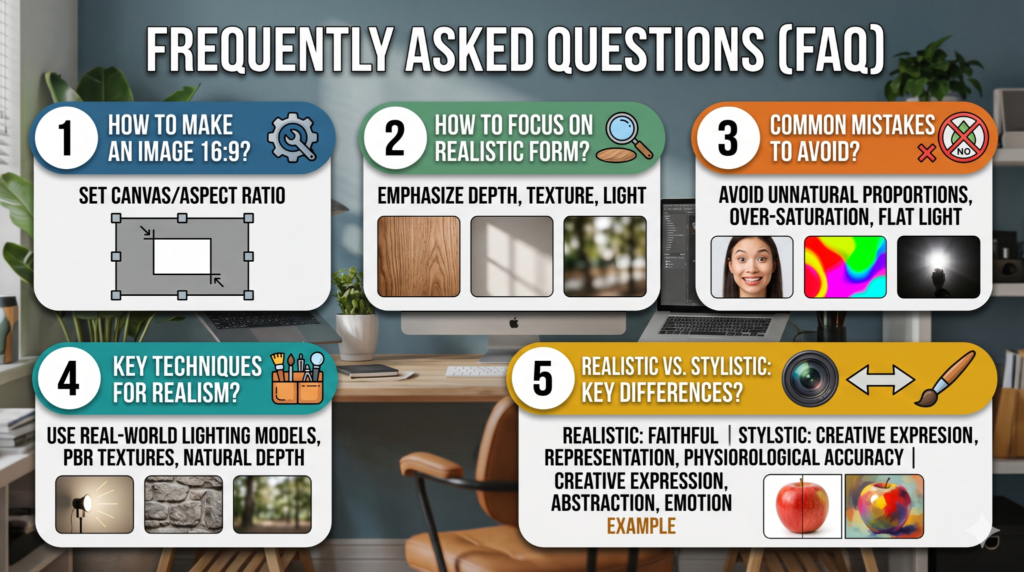
Frequently Asked Questions
Can I withdraw PF for home loan after 3 years service?
Yes, under Para 68-BD, after 3 years from UAN opening, withdraw up to 90% for repayment or purchase. Property in your/spouse name only. Process online; funds in 15 days max.
What is PF withdrawal limit for home loan repayment?
90% of total PF balance (employee + employer + interest), if >Rs 20k. Or lower of 36x salary or loan outstanding. One-time per house.
Documents needed for PF home loan withdrawal?
Aadhaar/PAN linked UAN, property deed/loan sanction/EMI statement. Self-attest; no notary. For repayment, lender letter suffices.
Is PF withdrawal for home loan taxable?
Tax-free if 5+ years service. Under 5 years, TDS if >Rs 50k. Post-withdrawal balance stays tax-deferred.
Can I withdraw PF for parents’ house loan?
No, property must be yours/spouse/joint. Parents’ name disqualifies; use personal loan instead.
How long does EPFO take to approve home loan PF claim?
3-15 days online. Delays from doc errors. Track daily; 80% under 10 days with KYC done.
Can unmarried employee withdraw PF for home loan?
Yes, if property in your name. No spouse needed; same 90% limit post-3 years.
What if PF withdrawal rejected for home loan?
Check rejection SMS fix KYC/bank/docs, refile same day. Appeal via EPFO grievance portal.
Can I withdraw PF for home loan down payment and EMI both?
Yes, one claim covers both under purchase/repayment. Specify split in form; up to 90% total.
Quick Summary Take This Away
PF withdrawal lets you tap 90% balance after 3 years for home loan repayment, purchase, or construction, slashing EMIs by 20-30%. Property in your/spouse name is non-negotiable. Online via UAN takes 10-15 days; link KYC first to dodge rejections.
Compare options: repayment for debt relief, construction for max amount. Avoid unlinked bank or wrong purpose. You’ve got real power here PF at 8.25% beats loan rates.
Log into EPFO portal today and check your balance.
Your three big takeaways: eligibility starts at 3 years with Rs 20k min, process is fully online post-KYC, and it accelerates homeownership without new debt. Head to unifiedportal-mem.epfindia.gov.in now—file Form 31 confidently. You handle HR complexities daily; this is just another win.