- What Is PF vs NPS for Retirement and Why It Matters Right Now
- Who This Is For Eligibility Rules
- How It Actually Works Complete Process
- Comparison Table PF vs NPS Options Side by Side
- Real Benefits With Numbers Where Possible
- Mistakes Most People Make and the Fix
- Expert Tips That Actually Work
- Frequently Asked Questions
- Quick Summary Take This Away
You’re a 25-year-old engineer in Bangalore, salary Rs 8 lakh yearly, staring at mandatory PF deductions and wondering if NPS adds real value or just complicates your retirement. This guide breaks down PF vs NPS exactly for young salaried Indians like you in 2026, with corpus calculators, tax math, and a clear winner based on risk comfort. By the end, you’ll know which to max, how much Rs 10k monthly grows to in 35 years, and steps to switch if needed.
The big confusion? Guaranteed 8.25% PF vs market NPS highs of 12% but hidden taxes and lock-ins flip the math. I sort it with real numbers. This HR site equips young professionals with benefit hacks, from PF to NPS, so you retire rich without boss dependency. Let’s pick your path.
What Is PF vs NPS for Retirement and Why It Matters Right Now
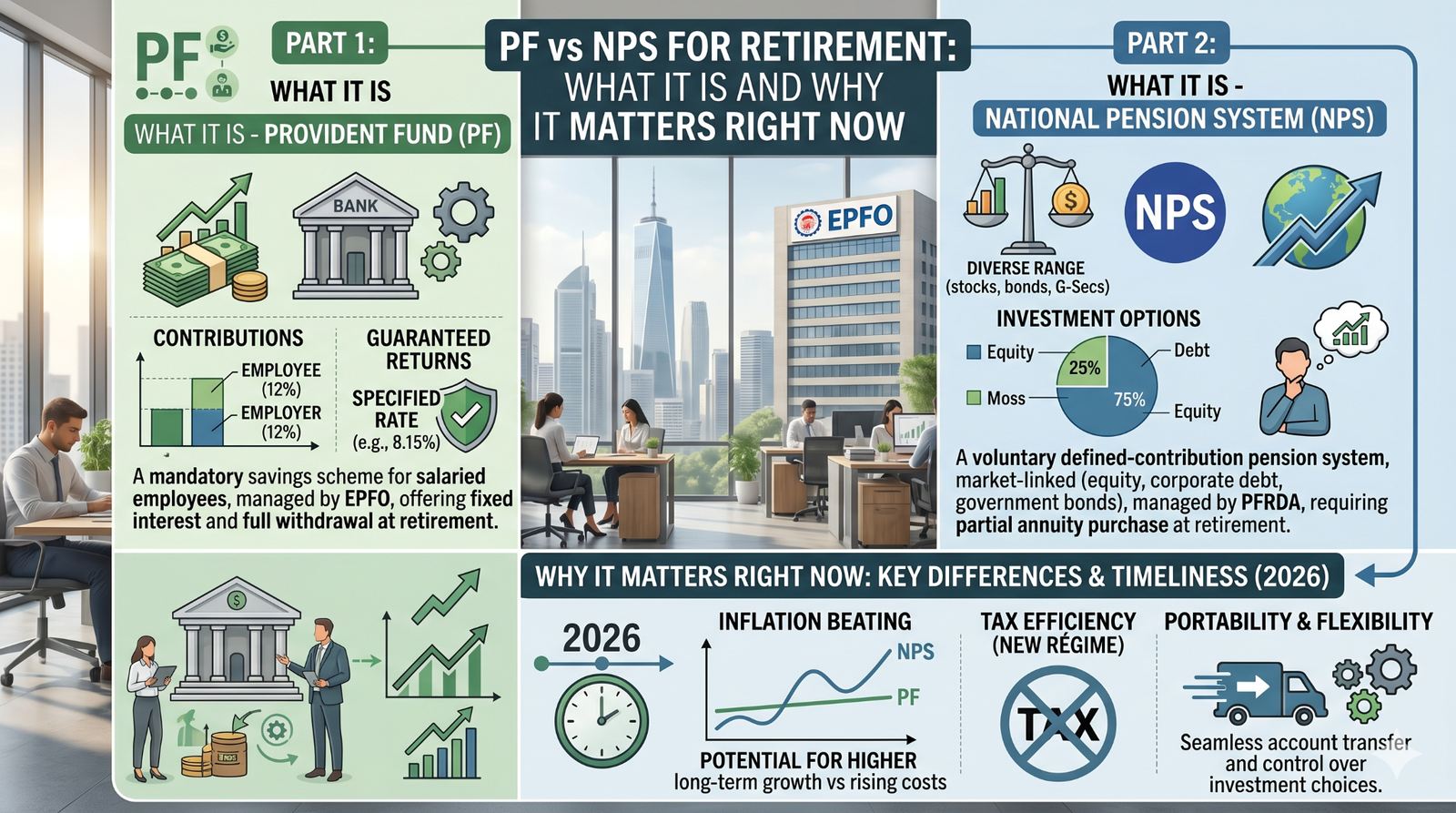
PF, or EPF, is your salary’s 12% auto-saved with employer match, earning fixed 8.25% in 2026, fully yours at 58. NPS lets you invest extra (self or employer up to 14%) in stocks/bonds for 10-12% average returns, but market-tied.
Why now? EPFO added 1.8 million youth last quarter, NPS hit 6 crore subscribers formal jobs boom, but inflation at 5% eats savings. NPS equity averaged 15% last year; PF steady 8.25%. Young Indians need both for Rs 5 crore corpus by 60.
In practice, PF feels like a forced saver; NPS rewards stock picks. 2026 PFRDA tweak: NPS lump sum to 80%, easing old myths. If skipping NPS, you miss Rs 50k extra tax break.
Who This Is For Eligibility Rules
Young salaried (18-30s) in firms with 20+ staff qualify for PF; NPS open to all Indians 18-70, salaried or not. Max PF if low-risk, stable job; NPS if you stomach volatility for growth.
Employer NPS match under 80CCD(2) up to 14% salary tax-free, the misunderstood goldmine. Categories:
- Risk-averse starters: PF only; 8.25% guaranteed suits Rs 5-10L salary newbies.
No market stress; full liquidity post-58. - Growth chasers (25-35): NPS Tier-1; equity tilt for 12% returns.
Suits IT pros; doubles corpus vs pure PF. - High earners (Rs 15L+): Both; stack Rs 50k 80CCD(1B) on NPS.
Caps EPS pension low.
Self-employed skip PF NPS only. NRIs ok for NPS. Don’t bother NPS if exit before 60; penalties bite.
How It Actually Works Complete Process
PF runs auto: 12% basic+DA each from you/employer (3.67% to EPS pension). Balance compounds monthly at 8.25%, credited March end. Check passbook on EPFO portal.
Step 1: Verify UAN. Log in to EPFO portal; link Aadhaar/PAN/bank. See balance, interest. Guides skip: update mobile or transfers fail.
PF transfers on job change auto if UAN active.
Step 2: For NPS, open Tier-1. Visit Protean Pan or bank; PRAN generated in 2 days. Choose active/auto choice, asset mix (E/C/G up to 75% equity).
Min Rs 1000/year; employer adds via payroll.
Step 3: Contribute. PF deducts salary; NPS via eNPS, auto-debit, or employer. Track via CRA app switch funds 4x/year.
Annual statement emails.
Step 4: Maturity/withdraw. PF full at 58, partial anytime (illness/home). NPS at 60: 60% lump tax-free (80% in 2026 tweak), 40% annuity. Pre-60: 20% lump if 3 years.
EPFO/NPS apps show projections. Most miss NPS Tier-2 for trading, no lock-in.
Comparison Table PF vs NPS Options Side by Side
| Option | Key Feature | Best For | Limitation | Verdict |
| EPF (Mandatory) | 8.25% fixed, employer 12% match, full lump at 58 | Conservative youth, stable jobs | No equity, EPS cap Rs 7500 pension | Safe base start here always |
| NPS Tier-1 Aggressive (75% Equity) | 12-15% avg, Rs 50k extra tax deduction | Growth seekers 18-40, long horizon | 40% annuity lock, market risk | Growth booster add on top |
| NPS Tier-1 Conservative (100% Debt) | 9-10%, flexible mix | Medium risk, nearing 50 | Lower returns than equity NPS | Bridge if ditching stocks late |
| VPF (Voluntary PF) | Up to 100% salary extra at 8.25% | High savers wanting guarantee | No equity upside | Max if NPS scares you |
EPF suits risk-off youth for simplicity; NPS aggressive for 25-year-olds chasing Rs 2cr+ corpus. Conservative NPS fits mid-career switchers. Do both for diversification.
Real Benefits With Numbers Where Possible
When you max PF at Rs 10k monthly (employer match), 35 years at 8.25% builds Rs 2 crore tax-free Rs 1.58cr from example calcs. NPS same Rs 10k at 12% hits Rs 2.8cr, but post-tax Rs 2.1cr + pension.
You’ll dodge Rs 1.5L tax yearly via 80C + Rs 50k 80CCD(1B). Most overlook employer NPS 14% match free Rs 1.4L yearly on Rs 10L salary, compounding huge.
Your life shifts: PF secures basics; NPS funds travel post-60. Rs 10k PF grows to Rs 1.2cr in 30yrs; NPS equity Rs 2.4cr. That equity bump surprised me first time.
Mistakes Most People Make and the Fix
Mistake 1: Ignoring NPS employer match, sticking to PF. Happens from “PF enough” myth. Misses free 14% salary boost. Fix: Ask HR for 80CCD(2) form; auto-enroll.
Mistake 2: NPS 100% debt choice at 25. Why? Fear stories. Caps at 10%; equity doubles corpus. Fix: Start 75% E, shift age 50.
You’re probably doing this: No Tier-2 NPS for liquidity. Thinks lock-in only. Fix: Open Tier-2 parallel, trade freely.
Mistake 3: Withdrawing NPS pre-60 full. 80% penalty. Fix: Partial 25% after 3yrs for home.
Mistake 4: PF VPF over NPS for tax. VPF caps 80C. Fix: Rs 1.5L PF/NPS split.
Expert Tips That Actually Work
Tip 1: Auto NPS 50% equity till 35, glide to debt. Locks growth early; PFRDA data shows 13% avg.
Tip 2: Employer NPS first 14% match tax-free beats self 10%. HR files; you contribute 0.
Tip 3: Tier-2 NPS for emergencies min Rs 250, no lock. Trade stocks debt same day.
Tip 4: Switch NPS funds quarterly on dips beat index by 2%.
Surprise tip: Post-75 NPS continue tax-free gains to 85, compounds 20% more.
Tip 5: Calc corpus yearly via npscra.in; adjust if <10% return.
Tip 6: Link PF to NPS via UPI auto-debit seamless.
Tip 7: At 60, SWP annuity 20% Rs 10k monthly vs locked buyout.

Frequently Asked Questions
PF vs NPS which gives higher returns 2026?
NPS equity tier averages 12-15% vs PF 8.25%. Rs 10k monthly: PF Rs 1.58cr/30yrs, NPS Rs 2.8cr. But PF guaranteed.
Is NPS better than PF for retirement?
Yes for growth under 40; both for most. NPS tax edge + equity; PF safety. Combo wins Rs 4cr corpus.
PF vs NPS tax benefits India 2026?
Both 80C Rs 1.5L; NPS extra Rs 50k 80CCD(1B), employer 14% tax-free. 60% NPS lump tax-free.
Can I withdraw full amount from NPS at 60?
80% lump in 2026 (up from 60%), 20% annuity. <Rs 5L full tax-free. Partial anytime post-3yrs 25%.
EPF interest rate vs NPS returns 2026?
EPF fixed 8.25%; NPS 9-15% market. Last 10yr NPS equity 10.5%, debt 10%.
Should I invest in both PF and NPS?
Yes, PF base, NPS top-up. Employer match free; diversifies risk-return.
NPS withdrawal rules after 60 years?
60% (now 80%) lump tax-free; rest annuity. Full if <Rs 5L. Pre-60: 20% lump post-3yrs.
PF or NPS for salaried employees 2026?
PF mandatory safe; add NPS for tax/growth. Skip NPS if high-risk averse.
Quick Summary Take This Away
PF offers guaranteed 8.25% with employer match, building Rs 2cr steady. NPS amps to 12% equity for Rs 2.8cr but needs 35yr horizon. Do both: PF safety + NPS growth/tax.
Mistakes like debt-only NPS halve gains; fix with 75% equity start. 2026 rules favor NPS liquidity.
Download NPS calc at protean.in today.
PF locks basics, NPS grows wealth your youth edge. Stack employer NPS match first. Run numbers for Rs 10k monthly; act now. You’re set to retire on Rs 1L+ pension easy.