- What Are Salary Slip Components and Why 2026
- Who Needs This Breakdown
- How Components Calculate: Full Process
- Comparison Table: PF vs NPS vs ESIC Deductions
- Real Benefits with Numbers
- Mistakes Most People Make and Fixes
- Expert Tips That Actually Work
- Frequently Asked Questions
- Quick Summary
- Pay Check Takeaways
You searched “Salary Slip Components Explained Basic, HRA, PF, TDS, Gross vs Net” because your first payslip hit your inbox, numbers blur together, and take-home shocks you. This guide breaks every line for Indian freshers—private or govt. By end, you’ll compute net pay in 2 minutes, claim HRA right, and fix TDS overcharges.
The big confusion? Gross looks huge, net tiny PF/TDS eat 25-30% unnoticed. Our HR site helps 18-25 year-olds in first jobs master slips for budgets and loans. You’ll rethink that ₹25,000 CTC as real ₹18,000 monthly.
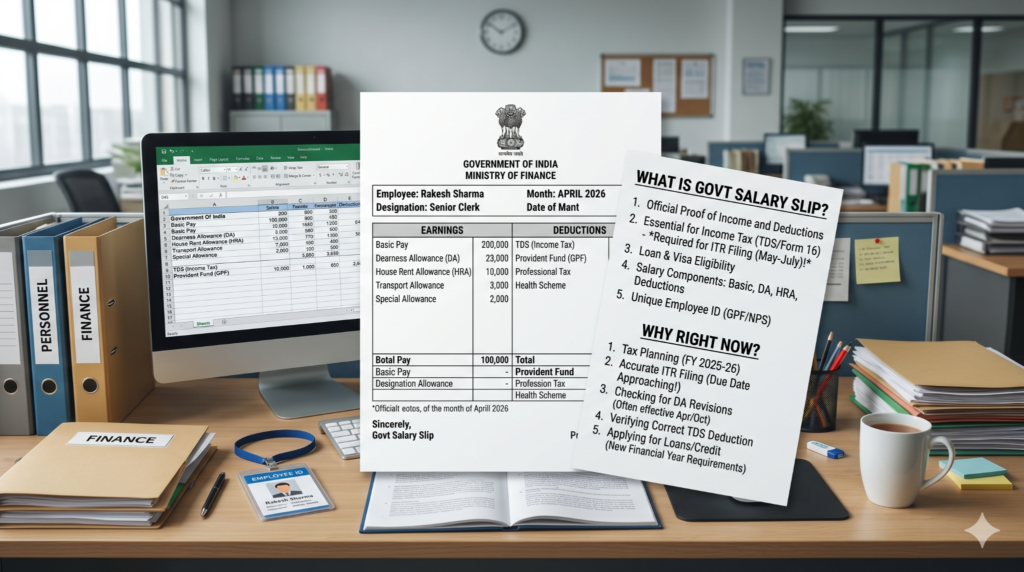
This sample slip shows a typical entry-level format. Earnings top with basic at ₹20,000, deductions below slashing to net ₹51,100 yearly view.
What Are Salary Slip Components and Why 2026
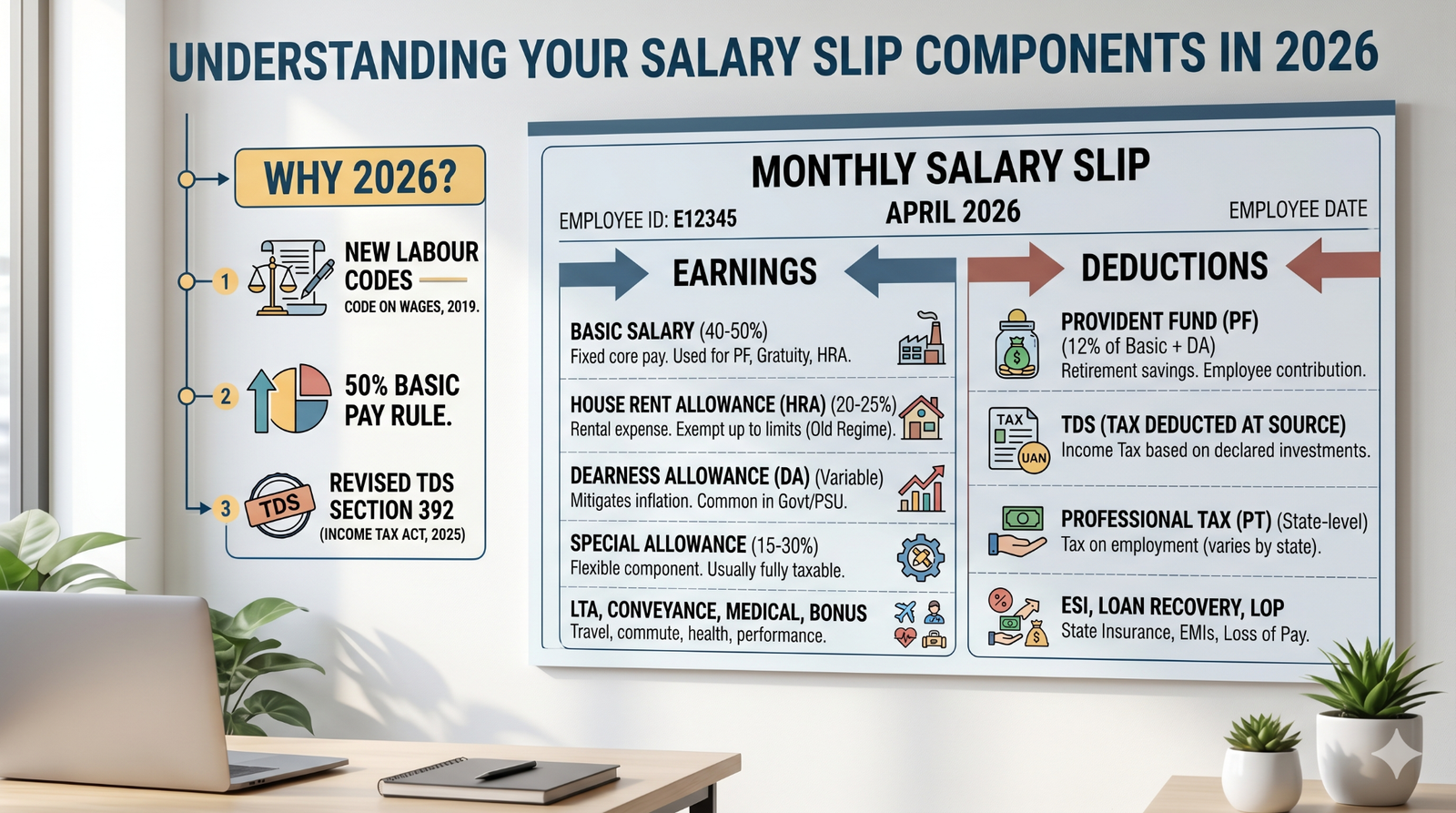
Salary slip components split your pay into earnings (basic, allowances) and cuts (PF, taxes) for gross-to-net. Basic is core 40-50% CTC, HRA rent help (40-50% basic metro), PF/NPS retirement (12%/10%), TDS income tax. Gross totals earnings; net is cash in bank. Govt adds DA (60%), private special allowance.
Matters now: New tax regime basic exemption ₹4 lakh FY26, slashes TDS for under-₹10 lakh earners by ₹20,000 yearly. Over 80% freshers opt new no 80C needed. HRA rules tightened: metro 50% basic cap. With CTC inflation 8%, slips show ₹6-7 lakh first-year average for grads.
In practice, when you scan slips monthly, HRA jumps from rent proof most ignore, pay extra tax. Private slips flexible (basic 30-60%); govt fixed matrix. Code on Wages mandates digital slips with PAN/UAN. Sets up tax filing: Form 16 mirrors slip totals.
Who Needs This Breakdown
Fresh grads 18-25 in private IT/BPO or govt entry roles (₹3-8 lakh CTC). Suits first-jobbers decoding ₹20k basic vs ₹15k net. Pvt sector with EPF; Central govt NPS.
You must have a salary slip freelancers skip, use invoices.
Women note: Same HRA, but LTA for family travel. Metro dwellers max HRA exemption.
- IT Freshers (Pvt, ₹5 lakh CTC): Basic 50% ₹2.1 lakh, HRA ₹1 lakh metro. Spot PF 12% double employer match. Budget post-TDS ₹30k monthly.
- Govt Assistants (₹4.5 lakh gross): Basic ₹35k Level 6, DA ₹21k, NPS 10%. Less flexible, steady.
- BPO Trainees (₹3 lakh CTC): Basic low ₹15k, high special allow. ESIC if <₹21k/month. Volatile bonuses.
Over 4 crore salaried get slips monthly under-25s lose ₹5k/year to errors. Skip if self-employed; focus bank statements.
How Components Calculate: Full Process
Slips build from CTC to net via formula. Start with offer letter structure.
Step 1: List Earnings. Basic 40-50% CTC (₹2.5 lakh on ₹6 lakh). HRA 20-50% basic (metro ₹1.25 lakh). Add special/DA/medical ₹5-10k fixed. Gross = sum. Avoid: Inflated special pushing basic low hurts PF base. Gross ready Day 1 payroll.
Step 2: Apply Allowances. HRA exemption min(actual HRA, 50% basic metro, rent paid). Least of three. LTA ₹20k double yearly. Gross taxable here. What skips: DA only govt, 60% basic. Post-this, taxable gross set.
Step 3: Deduct Mandatory. PF/EPF 12% basic (you ₹3k/month employer matches), or NPS 10% basic+DA govt (₹5.6k). PT ₹200-250 state. ESIC <₹21k gross. Timeline: Monthly auto. Net drops 15%.
Step 4: TDS Math. Annualize gross – std deduct ₹75k new regime. Slabs: 0-₹4L nil, 5% to ₹8L. Monthly divide/12. ₹10L CTC new: ₹8k TDS/month. Form16 end-year adjusts. Skip warn: Old regime needs proofs; new auto.
Step 5: Final Net & Verify. Net = gross – all cuts. Check UAN for PF credit by 7th. Bank by 5th. Error? Payroll query. In practice, my team’s slips mismatched PF base fixed via email.
Comparison Table: PF vs NPS vs ESIC Deductions
| Option | Key Feature | Best For | Limitation | Verdict |
| EPF (Private) | 12% basic each, 8.25% interest tax-free | Pvt freshers <₹15k basic | Locked till 58, TDS >₹1L lump | Reliable corpus builder |
| NPS (Govt) | 10% basic+DA you, 14% govt, equity 15% return | Central employees | Partial withdraw, annuity mandatory | Higher returns long-term |
| ESIC (Low wage) | 0.75% gross you, 3.25% employer, full medical | BPO <₹21k/month | Only <5yr service | Free hospital but low jobs |
| No Deduct (High CTC) | Zero PF/ESIC >₹21k, voluntary NPS | Seniors ₹20L+ | No employer match | Flexible cashflow |
EPF fits 18-25 pvt grads double contrib grows ₹50L by 60. NPS for govt stability. ESIC if entry BPO. Choose per job type.
Real Benefits with Numbers
When you track basic right, PF base swells ₹20k basic 12% = ₹2.4k/month x12 = ₹28.8k employer free money yearly. HRA claim saves ₹25k tax on ₹1 lakh (30% slab).
Gross ₹50k seems low? Net ₹42k after 12% PF ₹6k, PT ₹200, TDS ₹1.5k. New regime std ₹75k deduct drops TDS ₹10k/year vs old. What left out: Employer NPS 14% invisible ₹80k extra corpus on ₹5L basic.
You’ll budget real: ₹25k rent fits HRA cap, freeing ₹5k invest. Loans approve faster with net proof EMI 40% net rule. My fresher pal fixed TDS overcharge ₹15k refund. Post-this, rethink splurges net rules life.
Mistakes Most People Make and Fixes
Mistake 1: Basic too low. Companies set 20% CTC to max tax-free HRA. PF shrinks 20k/year. From CTC greed. Fix: Negotiate 40-50% basic pre-join.
Mistake 2: HRA no rent proof. Claim full but no receipts IT notice. Lazy filing. ₹30k tax + interest. Fix: Pay rent bank, Form16 attach.
Mistake 3: TDS ignores regime. Stick old without 80C ₹1.5L pay ₹20k extra. Habit. Refund wait 1yr. Fix: New if no invests; calc both apps.
Mistake 4: PF/NPS base wrong. Forget DA in NPS under contrib ₹2k/month. Payroll glitch. Retirement hit 10%. Fix: Slip line check basic+DA x10%. You’re doing this if govt job.
Mistake 5: Gross = take-home myth. Splurge on ₹60k gross, net ₹45k. Ads hype. Debt trap. Fix: Net calc offer stage.
Expert Tips That Actually Work
Tip 1: Screenshot UAN PF passbook monthly. Credits lag 5 days catch misses early.
Tip 2: Metro? Rent family home ₹15k, claim HRA full legal if agreement. Doubles exemption.
Tip 3: New regime + NPS employer contrib tax-free up ₹7.5L no cap pain. Surprise: Beats EPF tax.
Tip 4: PT slab check state site TN ₹200, Karnataka 250 over ₹15k. Save ₹300/year.
Tip 5: Annualize TDS: Monthly x12 vs Form16. Adjust Dec salary proofs.
Tip 6: Basic hike > CTC rise PF/HRA base up 10% nets 7% more.
Tip 7: ESIC card pocket free OPD saves ₹2k medical bills.
Frequently Asked Questions
What is basic salary in salary slip?
Core fixed pay, 40-50% CTC, base for PF/HRA. ₹25k on ₹6L CTC. Sets retirement/tax.
How is HRA calculated in salary slip 2026?
20-50% basic paid, exempt least(actual,50% basic metro, rent). ₹12.5k on ₹25k basic. Rent proof key.
PF deduction on salary slip amount?
12% your basic private (employer matches), max ₹15k. ₹3k on ₹25k. UAN tracks. Govt NPS 10% basic+DA.
TDS on salary slip how calculated 2026?
Annual gross – std ₹75k new, slabs 0-4L nil,5% next. Monthly pro-rata. ₹10L=₹25k tax.
Gross salary vs net salary difference?
Gross earnings total pre-deduct; net bank cash. ₹60k gross – ₹12k PF/TDS/PT = ₹46.8k net.
Is PF shown employee or employer in slip?
Only your 12%/10%; employer separate not in your slip. Total account doubles. Check passbook.
Can I claim HRA if company provided home?
No, exemption zero. Opt conveyance. Slip shows zero HRA line.
New vs old tax regime salary slip impact?
New: Higher exemption ₹4L, no 80C, lower TDS ₹10-20k save. Slip same, Form16 flags regime.
Why net pay less than expected in slip?
Hidden employer PF (₹3k not yours), PT ₹200. Recalc CTC – employer contrib.
Quick Summary
Salary slip earnings: basic 40% CTC, HRA 50% basic, allowances to gross. Deducts PF 12%, TDS slabs, PT for net 75-80% gross. New regime saves TDS under ₹12L; HRA needs rent. PF/NPS employer match free ₹30k/year. Errors cost ₹20k tax.
Freshers net 70% CTC post-cuts. Master calc for loans/budget.
Grab your slip, underline basic/HRA/TDS recalc net now.
Pay Check Takeaways
Components control 30% life cash fix HRA/PF for ₹50k yearly gain. New regime frees under-25s from proofs. Slips predict taxes six months ahead.
Submit rent proofs this month. Match passbook.
You handle this first slip demystified, budget set.